Extinguishing the R&D & FLARE In traditional drug development, bio-performance studies often feel like an expensive game of trial and error. When a formulation fails to perform as expected in the clinic, it signals a FLARE – a set of biopharmaceutical risks that can undermine even the most promising molecules.
Clinical failure doesn’t just stall a project; it represents a significant loss of market opportunity and a setback for therapeutic innovation.
The traditional bench-to-bedside; timeline is simply too slow. Patients shouldn’t have to wait years for a formulation to be optimized through repetitive cycles.
It is a paradox of the 21st century that we still rely so heavily on human subjects as the primary tool to assess basic dosage form performance.
Formulation-related inconsistencies create clinical uncertainty, potentially undermining the safety and efficacy of the entire therapy.
R&D costs skyrocket when clinical trials fail to hit the target profile, leading to wasted resources and budget overruns.
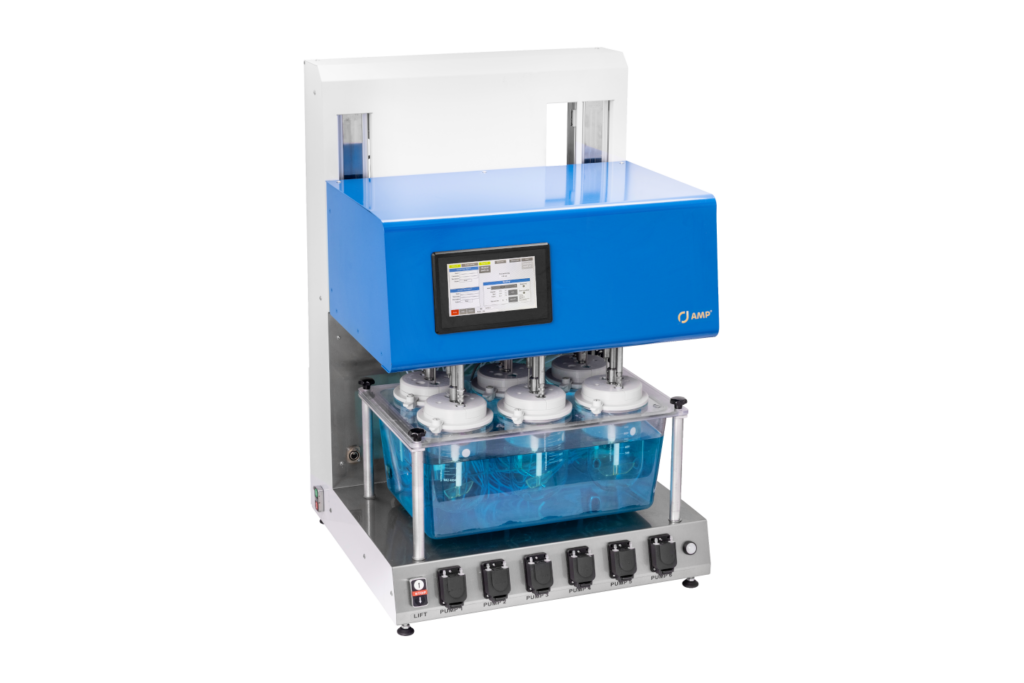
Main product used in this task/job
Precise biopredictive methods
The path to efficient drug development lies in moving away from reactive in-vivo testing toward proactive prediction of drug delivery performance of oral medicines in the preclinical stage.
At Physiolution, we replace ambiguity with accuracy. By implementing advanced biopredictive in vitro methodologies and in silico simulations during the preclinical stage, we provide a clearer window into how your formulation will behave in the human body.
Our goal is to de-risk your development process, shorten your timeline, and ensure your drug reaches the patients who need it without trial and error.
We are a multidisciplinary team of scientists and engineers pioneering the development of biopredictive dissolution testers and PK/PD tools. By integrating laboratory expertise with advanced engineering and analytics, we bring predictability to the most complex challenges in oral drug development.
We provide a physiologically oriented device that enables biorelevant simulation of intestinal pH gradients without altering the volume or ionic strength of the simulated intestinal media. Its operation is based on gaseous pH adjustment of hydrogen carbonate—the most biologically relevant buffering system in the human gut.
Simulating GI factors such as pH and enzymatic activity allows us to assess molecular suitability for oral delivery and support physiology-driven formulation development.
We gratefully acknowledge the support of: